Veranstaltungen (Auswahl)

Crossroads: Multidisciplinary investigations of South Asia's past

DA Workshop
  • Datum: 15.12.2017
  • Uhrzeit: 09:00 - 18:00
  • Ort: MPI SHH Jena
  • Gastgeber: Department of Archaeology
  • Kontakt: nayak@shh.mpg.de
South Asia has long been the site of incredible environmental, cultural, genetic, and linguistic diversity, with the hyper-diversity of the region being surpassed only by that of the continent of Africa. Moreover, owing to its geographical location, it serves as a “crossroads” between Europe, Africa and East, West and Southeast Asia throughout human history. With this workshop, we aim to bring together different specialists working in the region to share results and facilitate an inter-disciplinary approach to uncovering the past of this region. Presenters will draw on linguistic, genetic, bio-molecular and macroscopic lines of evidence to elucidate changes in diet, demography, and ecology across major cultural transitions in the region. [mehr]

Ökologische Chance, Evolution und die Entstehung der Flohpest (English title: "Ecological opportunity, evolution, and the emergence of flea-borne plague")

Distinguished Lecturer Seminar Series
  • Datum: 13.12.2017
  • Uhrzeit: 15:30
  • Vortragende(r): Bernard Joseph Hinnebusch
  • Chief, Plague Section, Laboratory of Bacteriology, National Institutes of Health (USA)
  • Ort: MPI SHH Jena
  • Raum: Villa V14
  • Gastgeber: Department of Archaeogenetics
  • Kontakt: arnold@shh.mpg.de

Ancient Microbiomes and the Accuracy of Taxonomic Classifiers (Alte Mikrobiome und die Genauigkeit taxonomischer Klassifikatoren)

DAG Workshop
  • Datum: 13.12.2017
  • Uhrzeit: 13:30
  • Vortragende(r): Irina Velsko
  • Ort: MPI SHH Jena
  • Raum: Villa V03
  • Gastgeber: Abteilung Archäogenetik
  • Kontakt: arnold@shh.mpg.de
Organized by Christina Warinner [mehr]

DAG und DLCE Workshop: LAG2 - Herkunft und Ausbreitung uralisch-sprechender Populationen

  • Beginn: 29.11.2017
  • Ende: 01.12.2017
  • Ort: MPI SHH Jena
  • Raum: Villa V14
  • Gastgeber: Abteilung Archäogenetik und Abteilung Sprach- und Kulturevolution
  • Kontakt: arnold@shh.mpg.de

DA Workshop: Telescopic and Microscopic Visions of Central Asian Prehistory

DA Workshop
  • Datum: 07.11.2017
  • Ort: MPI SHH Jena
  • Raum: Villa V14
  • Gastgeber: Abteilung Archäologie
  • Kontakt: weinzierl@shh.mpg.de
Exploring the long durée of Central Asian prehistory through cross-disciplinary approaches and methodologies. [mehr]

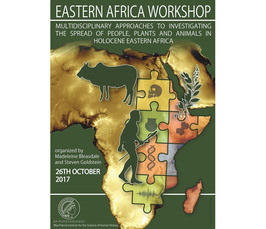
Eastern Africa Workshop

DA Workshop
  • Datum: 26.10.2017
  • Uhrzeit: 09:00 - 19:00
  • Ort: MPI SHH Jena
  • Raum: Villa V03
  • Gastgeber: Department of Archaeology
  • Kontakt: bleasdale@shh.mpg.de
Weiter Informationen finden Sie auf der englischen Version unserer Webseite. [mehr]

Epizoötic Challenges to Pastoral Expansion in Africa: Minding the “Bovine Gap”

Distinguished Lecturer Seminar Series
  • Datum: 25.10.2017
  • Uhrzeit: 15:30 - 17:00
  • Vortragende(r): Diane Gifford-Gonzalez
  • Ort: MPI SHH Jena
  • Raum: Villa V14
  • Gastgeber: Abteilung Archäologie
  • Kontakt: weinzierl@shh.mpg.de
In two spatiotemporally separate cases in sub-Saharan Africa, small domestic livestock appear around 1000 years before cattle. South of Lake Turkana (eastern Africa), sparse domestic caprines and Lake Turkana ceramics of the Nderit tradition appear c. 4000 BP, nearly 1000 years before the first evidence for cattle. In southern Africa, sheep date to nearly 2200 BP, centuries before evidence for cattle. In 2000, I proposed that African savannas presented novel disease challenges to cattle pastoralism. Sleeping sickness (trypanosomiasis) is a continental-scale risk in brushy areas, but wildebeest-borne malignant catarrhal fever (WD-MCF) and East Coast Fever (ECF) attack cattle in the grasslands that they favor. WD-MCF has a nearly 100% death rate in exposed cattle, and ECF, probably originating with an earlier transmission of Theileria parva from African buffalo to cattle, kills 20% of each cattle cohort. Infection risk is heightened by the three species’ overlapping forage and water requirements. Pastoralists may have exacerbated cattle herds’ vulnerability to infection through anthropogenic savanna expansion. This hypothesis could be falsified by finds of cattle dating to the “Bovine Gap” timespans in either region. As a test, I reviewed 2000-2015 East African archaeofaunal evidence, plus fauna from a stratified site south of Nairobi, GvJm44, yielding Nderit pottery in its lower level. I report these results and discuss how infectious disease genomics might offer finer resolution of routes and times of initial transmission of several wild ungulate diseases to livestock. [mehr]
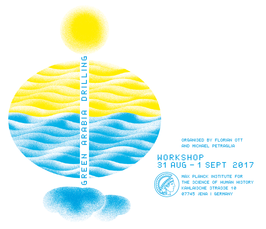
Green Arabia Drilling

DA Workshop
  • Beginn: 31.08.2017
  • Ende: 01.09.2017
  • Ort: MPI SHH Jena
  • Raum: Villa V03 und V14
  • Gastgeber: Abteilung Archäologie
  • Kontakt: ott@shh.mpg.de
Interdisziplinäre Forschung zu Klima- und Umweltveränderungen und ihr Einfluss auf die Verbreitung des Menschen im Quartär auf der Basis von Sedimentkernen aus dem Jubbah-Paläosee (Saudi-Arabien). Organisatoren: Dr. Florian Ott und Prof. Michael Petraglia. [mehr]

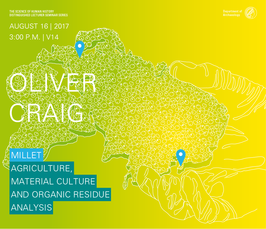
Millet Agriculture, Material Culture and Organic Residue Analysis

Distinguished Lecturer Seminar Series
  • Datum: 16.08.2017
  • Uhrzeit: 15:00
  • Vortragende(r): Oliver Craig
  • Direktor, BioArCh, University of York
  • Ort: MPI SHH Jena
  • Raum: Villa V14
  • Gastgeber: Abteilung Archäologie
  • Kontakt: hendy@shh.mpg.de

Vortrag von Hideaki Kanzawa-Kiriyama

Eurasia3angle talk
  • Datum: 16.08.2017
  • Uhrzeit: 14:00 - 15:30
  • Vortragende(r): Hideaki Kanzawa-Kiriyama
  • National Museum of Nature and Science in Tsukuba (Japan)
  • Ort: MPI SHH Jena
  • Raum: Villa V03
  • Gastgeber: Abteilung Sprach- und Kulturevolution
  • Kontakt: schueck@shh.mpg.de
Genomic insights into the relationship between ancient Japanese and modern East Eurasians [mehr]

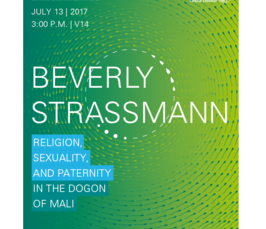
Vortrag von Beverly Strassmann

Distinguished Lecturer Seminar Series
  • Datum: 13.07.2017
  • Uhrzeit: 15:00 - 16:30
  • Vortragende(r): Beverly Strassmann
  • Department of Anthropology and RCGD, Institute for Social Research, University of Michigan
  • Ort: MPI SHH Jena
  • Raum: Villa V14
  • Gastgeber: Department of Linguistic and Cultural Evolution
  • Kontakt: schueck@shh.mpg.de
Religious Control of Sexuality Increases Paternity Certainty: A longterm study of the Dogon of Mali [mehr]

DLCE Workshop "Language shift and substratum interference in (pre)history"

DLCE Workshop
  • Beginn: 11.07.2017 09:00
  • Ende: 12.07.2017 18:00
  • Ort: MPI SHH Jena
  • Raum: Villa V14
  • Gastgeber: Department of Linguistic and Cultural Evolution
  • Kontakt: schueck@shh.mpg.de

Biologische Marker des Wandels in Südostasien und der Inselwelt Südostasiens

DA Workshop
  • Beginn: 29.06.2017 09:00
  • Ende: 30.06.2017 18:00
  • Ort: MPI SHH Jena
  • Raum: Villa V14
  • Gastgeber: Abteilung Archäologie
  • Kontakt: tromp@shh.mpg.de
Despite widespread acknowledgement that Island Southeast Asia (ISEA) has been an important link between Southeast Asia and the Southern Hemisphere for at least 50,000 years, little is known about interactions both within ISEA and with Mainland Southeast Asia to the north, and Sahul (Australia and New Guinea) to the south. Due to the tropical climate of the Southeast and Island Southeast Asia region, organic materials are rarely preserved and traditional archaeological techniques have not been particularly successful when it comes to understanding how people interacted with and within their environments. In this workshop we will be discussing novel and innovative methodologies and ideas that might be applied to the region, while highlighting recent findings that have already employed some of these techniques such as genomic, isotopic, lipid, microparticle and proteomic analyses. [mehr]

Early Hominin Diet: Where are we and where do we go from here? (Frühe menschliche Ernährung: Aktueller Forschungstand und nächste Schritte)

Distinguished Lecturer Seminar Series
  • Datum: 28.06.2017
  • Uhrzeit: 15:00 - 16:30
  • Vortragende(r): Matt Sponheimer
  • University of Colorado / Department of Anthropology
  • Ort: MPI SHH Jena
  • Raum: Villa V14
  • Gastgeber: MPI SHH Jena
  • Kontakt: weinzierl@shh.mpg.de

Thomas Higham: Jüngste Fortschritte bei der Datierung des Paläolithikums und ihre Implikationen

Distinguished Lecturer Seminar Series
  • Datum: 17.05.2017
  • Uhrzeit: 15:00 - 16:30
  • Vortragende(r): Thomas Higham
  • Ort: MPI SHH Jena
  • Raum: Villa V14
  • Gastgeber: Department of Archaeology

Quantitative Methoden - Frühjahrskurs 2017

  • Beginn: 08.05.2017
  • Ende: 14.05.2017
  • Ort: MPI SHH Jena
  • Gastgeber: Abteilung Sprach- und Kulturevolution
Weitere Informationen finden Sie auf unserer englischsprachigen Webseite. [mehr]

Forsche Schüler Tag 2017

  • Datum: 27.04.2017
  • Uhrzeit: 09:00 - 13:00
  • Vortragende(r): Beate Kerpen, Petra Mader und Wissenschaftler/-innen des Instituts
  • Ort: MPI SHH Jena
  • Raum: Reception
  • Gastgeber: Max-Planck-Institut für Menschheitsgeschichte
  • Kontakt: presse@shh.mpg.de
Schüler/innen ab der 8. Klasse aufgepasst: Entdeckt, wie spannend die Menschheitsgeschichte ist! Wissenschaftlerinnen und Wissenschaftler am Max-Planck-Institut für Menschheitsgeschichte laden euch ein, mehr über einzelne Forschungsfragen zu erfahren und mit ihnen kleine Aufgaben und Tests zu ganz unterschiedlichen Fragestellungen durchzuführen. [mehr]

Using isotopes to track past human migrations

Distinguished Lecturer Seminar Series
  • Datum: 12.04.2017
  • Uhrzeit: 15:00 - 16:30
  • Vortragende(r): Michael Richards
  • Simon Fraser University, Department of Archaeology
  • Ort: MPI SHH Jena
  • Raum: Villa V14
  • Gastgeber: Abteilung Archäogenetik
Isotope analysis of human and animal bone and teeth can be used to determine their geographic origin, and how they moved over their lifetimes. In contrast to DNA and linguistic analysis, which can determine origins and migrations over generations, isotope analysis has the promise of being able to identify movements of individuals at different points of their lives. The method has it’s limitations, but can be used to address both larger archaeological questions of past population movements and also provide a glimpse into the life histories of individual skeletons. In this talk I will introduce the methods we use for this analysis (strontium and sulphur isotope analysis) and then provide examples of how we have applied this method to look for human migration and movements in a variety of current and unpublished case studies. These will include studies of Neanderthal mobility, identifying possible pilgrims at the Roman and Byzantine world heritage sites of Hierapolis and Ephesus in Turkey, and the results of a large-scale isotopic study of Minoans and Mycenaeans in Bronze age Greece. [mehr]

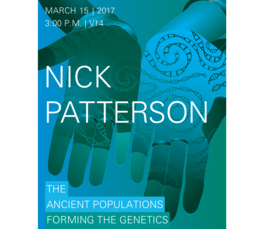
Nick Patterson - The Ancient Populations forming the Genetics of Modern India

Distinguished Lecturer Seminar Series
  • Datum: 15.03.2017
  • Uhrzeit: 15:00 - 17:00
  • Ort: MPI SHH Jena
  • Raum: Villa V14
  • Gastgeber: Abteilung Archäogenetik
  • Kontakt: schiffels@shh.mpg.de

Megafauna und Methoden: Neue Ansätze zum Studium des Massensterbens der Riesentiere

DA Workshop
  • Beginn: 20.02.2017
  • Ende: 21.02.2017
  • Ort: MPI SHH Jena
  • Raum: Villa V03
  • Gastgeber: Abteilung Archäologie
  • Kontakt: weinzierl@shh.mpg.de

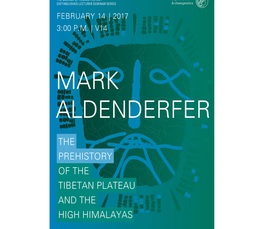
Mark Aldenderfer - The Prehistory of the Tibetan Plateau and the High Himalayas

Distinguished Lecturer Seminar Series
  • Datum: 14.02.2017
  • Uhrzeit: 15:00 - 17:00
  • Ort: MPI SHH Jena
  • Raum: Villa V14
  • Gastgeber: MPI SHH Jena
  • Kontakt: presse@shh.mpg.de

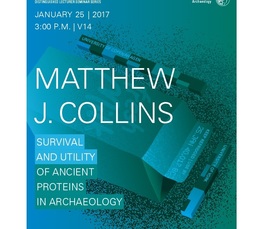
Survival and utility of ancient proteins in archaeology

Distinguished Lecturer Seminar Series
  • Datum: 25.01.2017
  • Uhrzeit: 15:00 - 16:30
  • Vortragende(r): Matthew Collins
  • University of Copenhagen/University of York
  • Ort: MPI SHH Jena
  • Raum: Villa V14
  • Gastgeber: Abteilung Archäologie
Zur Redakteursansicht